Why your engine needs a flush… (and how to do it).
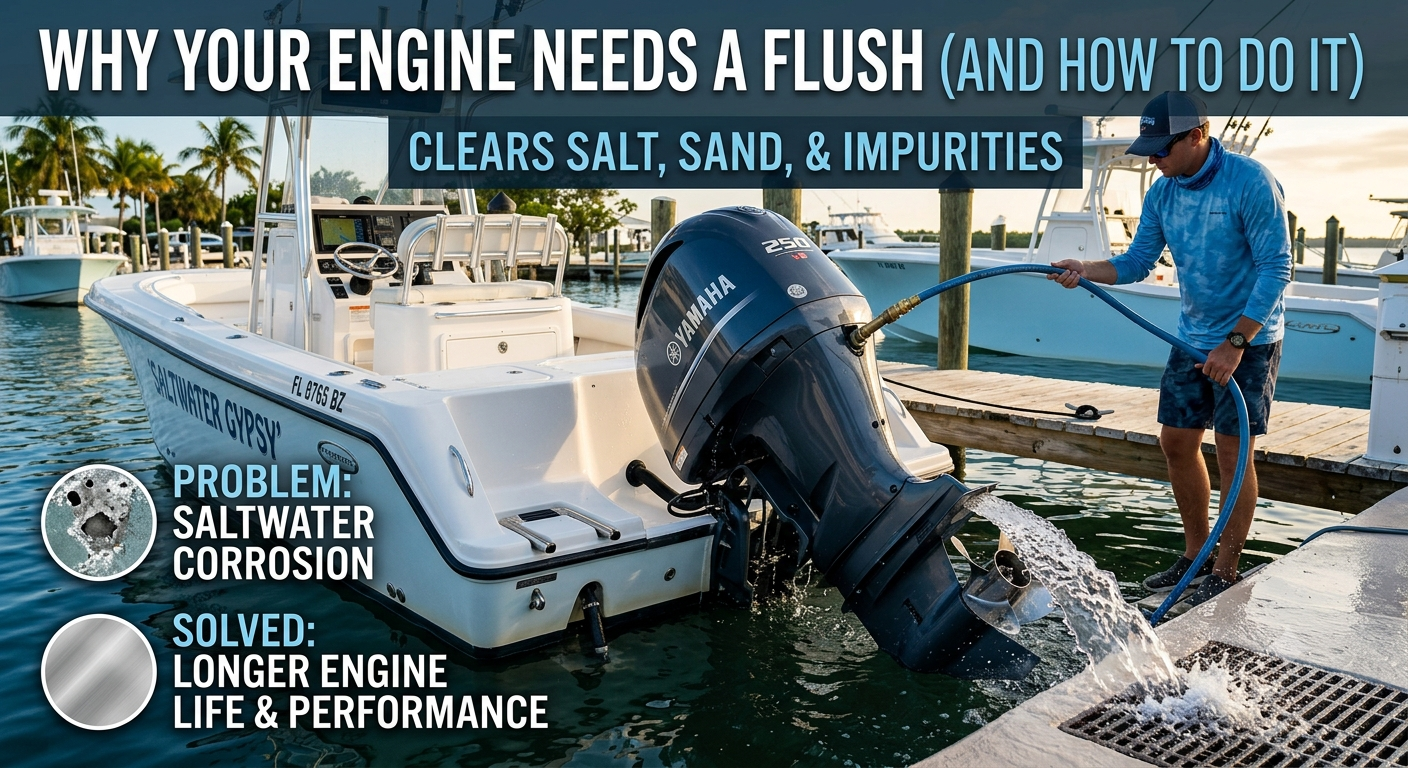
Method 1: Using Motor Flushers ("Muffs")
This is the traditional method used when the boat is out of the water (on a trailer or lift). It allows you to run the engine so the thermostat opens and flushes the entire cooling system.
Connect the Muffs: Slide the rubber cups of the motor flusher over the engine's lower unit, ensuring they completely cover the water intake grates on both sides.
Attach the Hose: Screw a standard garden hose into the fitting on the muffs.
Turn on the Water: Turn the spigot on fully. Water should be visibly leaking out from around the rubber cups; never start the engine without water flowing, as dry running will immediately destroy the rubber water pump impeller.
Start the Engine: Ensure the engine is in neutral and start it. Keep the engine at a idle; do not rev it.
Monitor the Flow: Verify that water is pumping out of the "tell-tale" (the small stream or pee-hole at the back of the engine). If no water flows within 15 seconds, shut the engine off immediately to check for blockages or alignment issues.
Run the Engine: Let the engine idle for 10 to 15 minutes until it reaches operating temperature, allowing fresh water to circulate through the entire block.
Shut Down: Turn off the engine first, then turn off the garden hose and remove the muffs.
Method 2: Using the Built-In Flush Port
Most modern outboard engines feature a dedicated garden hose attachment directly on the engine block. This method is typically used while the boat is still in the water or when you prefer not to run the engine.
⚠️ Important: For most major manufacturers, do not run the engine while using the built-in flush port unless the owner's manual explicitly states it is safe to do so. Running the engine without water supplying the lower unit intake can destroy the water pump.
Tilt the Engine: If the boat is in the water, tilt the engine up so the lower unit is out of the saltwater.
Locate the Port: Find the flush port plug (usually located near the lower cowling or back of the engine) and remove the cap.
Connect the Hose: Screw the garden hose directly into the fitting.
Turn on the Water: Turn the water spigot on fully.
Flush the System: Let the fresh water run through the system for 10 to 15 minutes while the engine remains completely off. The static water pressure is enough to rinse the cooling passages.
Disconnect: Turn off the water, unscrew the hose, and securely replace the flush port cap.
Pro-Tips for Engine Longevity
Flush Immediately: Salt crystallizes quickly once the engine cools down. Flushing while the engine is still warm from operation is most effective.
Vertical Storage: After flushing, tilt the engine all the way down into the vertical position. This allows all the remaining water to drain out via gravity, preventing pooling and corrosion inside the housing.
