The Top 5 Signs Your Boat Needs Immediate Engine Repair
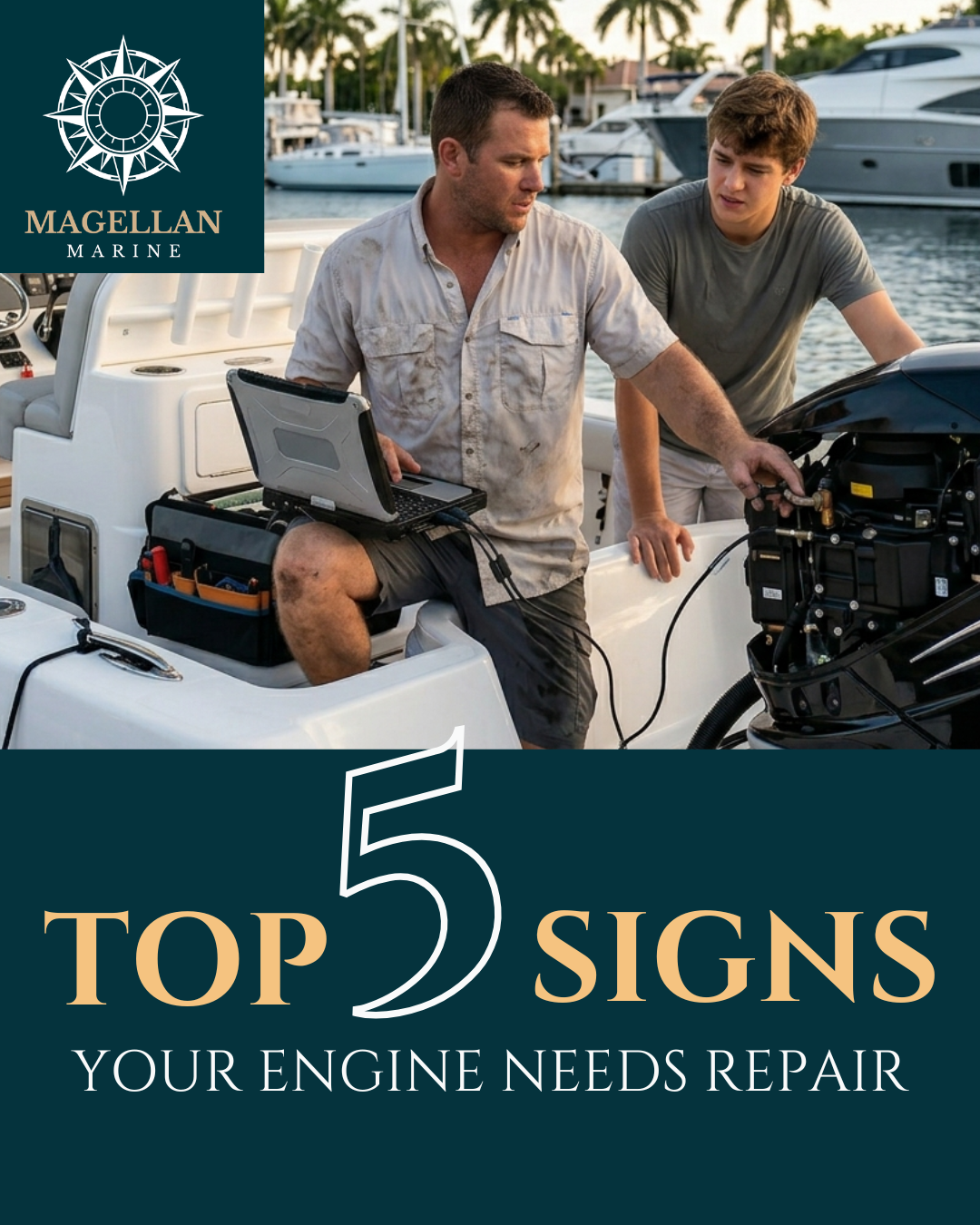
A Guide to Precision Diagnostics
Let’s be real for a second. There is absolutely nothing like being out on the water. You’ve got the sun on your face, a cool breeze blowing through your hair, and nothing but open horizon ahead of you. It’s pure freedom.
But you know what can ruin that perfect vibe faster than a sudden summer downpour?
A dead engine.
Getting stranded miles from the dock isn't just a mood killer—it can get dangerous quickly. As boaters ourselves, we know exactly how stressful engine trouble can be. Your boat is your escape, your happy place, and an expensive investment. The last thing you want to do is ignore a small issue until it turns into a massive, bank-account-draining catastrophe.
Luckily, your boat’s engine usually tries to talk to you before it completely gives up the ghost. You just need to know how to listen.
At Magellan Marine, we believe in Professional Peace of Mind. That’s why we’ve put together this quick, no-nonsense guide to the top 5 signs your boat needs immediate engine repair. Let's dive into some precision diagnostics so you can spot the drama before it strands you.
1. Excessive Smoke (And What the Colors Actually Mean)
A little bit of exhaust vapor is normal, especially when you first crank up the engine on a chilly morning. But if your boat starts looking like a smoke machine at a haunted house, you've got a problem.
Pay close attention to the color of the smoke, because it's a direct clue to what’s breaking down inside:
Black Smoke: This usually means your engine is burning way too much fuel. It could be a clogged air filter, a faulty carburetor, or a busted fuel injector. (To monitor your fuel lines and keep things clean, grabbing a heavy-duty Sierra International Fuel Water Separator can save your injectors from getting ruined by bad gas).
White Smoke: This is often a sign of water or coolant getting into the combustion chamber. It usually means a blown head gasket or a cracked block. This is a massive "stop the engine right now" emergency.
Blue/Grey Smoke: This means your engine is burning oil. Your seals or piston rings might be wearing out, letting oil slip into places it shouldn't be.
2. Strange Noises (Knocking, Clunking, or Screeching)
Every boater gets used to the natural purr of their engine. You know exactly what it sounds like when it's happy. So, when it starts making new, aggressive sounds, don't just turn up your Bluetooth speaker to drown it out.
Screeching or Squealing: This is almost always a belt issue. A loose, worn-out, or misaligned serpentine belt will scream at you. If it snaps, your alternator and water pump stop working, and you’re dead in the water.
Knocking or Pinging: A metallic knocking sound usually points to a serious internal mechanical issue, like worn-out bearings or bad timing.
Loud Clunking When Shifting: If shifting into gear feels rough or makes a loud thud, your transmission or lower unit gears might be failing.
Pro-tip: Keep a Standard Horizon Digital Multimeter on board to test your alternator and battery output if a slipping belt causes your voltage to drop!
3. The Temperature Gauge is Creeping Into the Red
Outboards and inboards rely heavily on constant water flow to stay cool. If your temperature gauge starts spiking, or if your temperature warning light pops on, you need to shut things down immediately.
An overheating boat engine can warp components, melt seals, and completely destroy itself in a matter of minutes.
The most common culprit? A ruined water pump impeller. Impellers are small rubber wheels that pump raw water through your cooling system. They degrade over time, especially if you accidentally run your engine out of the water or suck up sand and mud.
If you like doing basic checks yourself, keep an Etekcity Infrared Thermometer Gun in your marine toolbox. It lets you safely shoot a laser at different parts of the engine block to find exact hot spots and confirm if your dash gauge is actually reading correctly.
4. A Sudden, Confusing Loss of Power
You push the throttle forward, expecting that satisfying surge of speed, but instead... nothing. The engine bogs down, sputters, or struggles to get the boat up on a plane.
A sudden loss of power or a rough idle can be caused by a few different things:
Bad Spark Plugs: If your plugs are fouled or old, your engine will misfire. (We always recommend keeping a spare set of NGK Marine Spark Plugs and a GearWrench Spark Plug Socket Set in your onboard emergency dry bag).
Fuel System Restrictions: A clogged fuel filter or a pinched fuel line will starve your engine of the gas it needs to run.
Electrical Gremlins: Corrosion is a boat's worst enemy. A corroded ground wire or loose battery terminal can disrupt the signal to your engine's computer.
5. Mystery Fluid Leaks (Oil or Coolant in the Bilge)
Get into the habit of checking your bilge regularly. It should be relatively clean and dry. If you notice a dark sheen of oil or a pool of bright green/pink coolant floating down there, your engine is crying for help.
Leaking oil means your seals, gaskets, or oil pan are failing. Running low on oil will cause catastrophic friction damage inside the engine block. If it’s coolant, your closed-cooling system has a leak, which leads straight back to the overheating issues we talked about earlier.
Note: Never pump oily bilge water overboard! Keep a pack of Star Brite Oil Absorbing Pads in your bilge to soak up any accidental spills safely and keep our waterways clean.
Precision Diagnostics: Don't Guess, Know For Sure
Modern marine engines are incredibly complex machines. Gone are the days when you could fix every single issue with a flathead screwdriver and some duct tape. Today's outboards and inboards feature advanced computer modules, intricate fuel injection systems, and sensitive sensors.
Trying to guess what’s wrong can waste thousands of dollars on parts you don’t actually need. That's where precision diagnostics come into play. By plugging specialized diagnostic software directly into your engine’s Electronic Control Unit (ECU), a professional technician can see exactly what errored, when it happened, and how to fix it permanently.
Let Magellan Marine Bring the Repair Shop to You!
If you’ve noticed any of these warning signs, don't panic—and definitely don't let it sit and get worse.
At Magellan Marine Co., we specialize in professional, mobile engine repair. You don't have to worry about the hassle of trailering your boat to a crowded shop and waiting weeks for an appointment. We bring expert tools, precision diagnostics, and true Professional Peace of Mind right to your dock or marina.
Let's get your boat running perfectly before your next weekend trip.
👉 Click Here to Schedule a Diagnostic Service with Magellan Marine Today!
Boater's Emergency Kit List (Amazon Affiliate Links)
To help you stay prepared on the water, here are the top-rated tools and maintenance items mentioned in this article. Keeping these on board can mean the difference between a quick fix and a long tow home:
Sierra International Fuel Water Separator – Keep your fuel pristine and protect your injectors.
Standard Horizon Digital Multimeter – Perfect for troubleshooting electrical drops and battery life.
Etekcity Infrared Thermometer Gun – Quickly spot engine overheating and verify gauge accuracy.
NGK Marine Spark Plugs – Reliable, high-performance plugs to prevent mid-water misfires.
GearWrench Spark Plug Socket Set – Magnetic sockets to ensure you don't drop plugs into the bilge.
Star Brite Oil Absorbing Pads – Clean up bilge leaks cleanly and protect the marine environment.
*Disclaimer: As an Amazon Associate, we earn from qualifying purchases made through the links in this post.*
